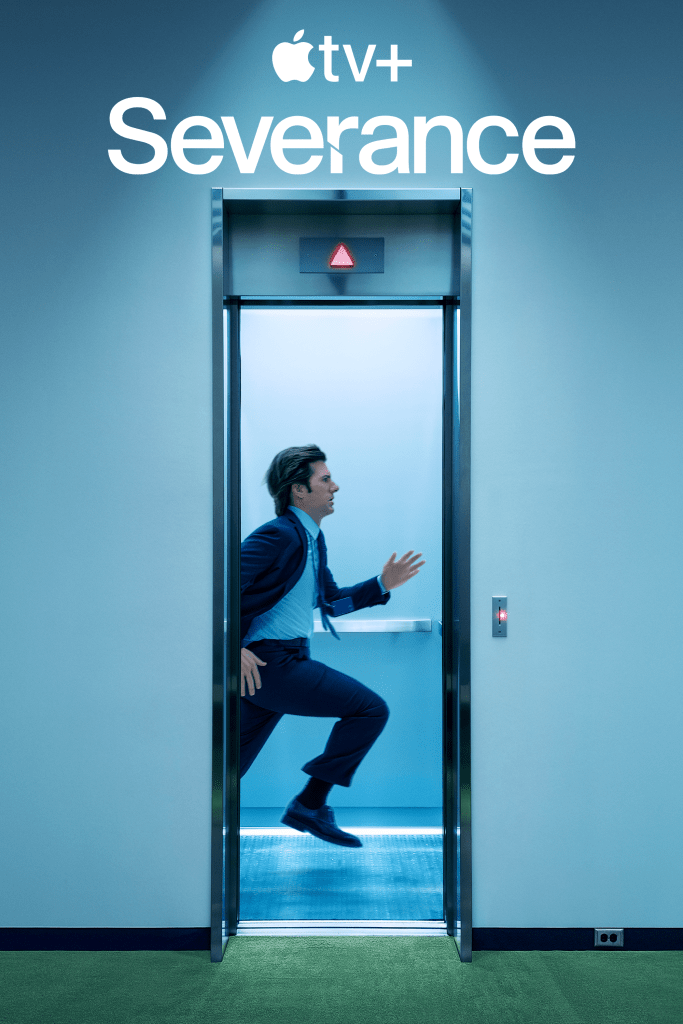
**This review contains spoilers**
After a long and arduous three-year wait, Severance has finally returned to our television screens for its second season. The hiatus has been particularly grueling considering the incredible and intense cliffhanger the first season left us on. The dystopian sci-fi show, created by Dan Erickson and produced (and sometimes directed) by Ben Stiller, stars Adam Scott as Mark, an employee of a corporation known as Lumon. Mark is part of a team that has undergone a procedure to sever their work memories from the rest of their lives. Season 1 focused on Mark’s Macro Data Refinement (MDR) team beginning to realize everything is not what it seems at Lumon and starting to push back while finding connection with each other. It all comes to a head in the finale when the team stages a plot to switch into their innie personas in the outside world and reveal the truth about the severance procedure. Season 2 picks up in the aftermath of this rebellion as well as the revelation that Mark’s wife, Gemma, is actually still alive and trapped somewhere within Lumon. While the company doubles down efforts to keep the employees in their place, the MDR team struggles to return to “normal” after discovering life outside of their cubicles. In this journey, Severance season 2 tones down the humor, ramps up the aesthetic oddity, deepens the emotionality, loses itself in the spectacle occasionally, but is never anything less than completely captivating.
Season 1 felt like a slow but continuous build from episode to episode. Each episode was better than the last. Season 2 throws this model out the window. The pace, dynamic, structure of each episode was completely different while the plot swung up and down. The season was defined by one-offs. The first episode was innies only, the second was outies only, we got the ORTBO, the Gemma episode, the Cobel episode, and so on. Episode 4, the ORTBO (Outdoor Retreat and Team Building Occurrence, obviously), where we saw the innies in the outside world for the first time, was a wild swing that paid off. I loved the weirdness of it and how visually striking it was. There were also no digital effects used in the making of the episode. They were really out in the woods, shooting in snow and fog. While in some moments going deep into the Kier Eagan lore, the episode also gave us a look at a new side of the innies when forced outside the confines of the office.
Episode 7 was another visual departure and was widely considered not only the best of the season, but one of the best TV episodes in recent history. Gemma’s story is revealed in this episode directed by cinematographer Jessica Lee Gagné in her first time directing. I can’t overemphasize how magnificent both the cinematography and editing are in this episode. It looks beautiful and it is clear how much work was put into it. Jessica Lee Gagné even told Esquire that for a shot that transitions from one room to another through an electrical cable, no CGI was used. They actually moved a camera through a cable. The aesthetic is so wildly different it would feel like a different show were it not for the trademark idiosyncrasies of the Severance world we’ve come to know. Still weird, but a little more somber. We finally get to see Gemma as a normal, relatable human being instead of only knowing her as the stilted Ms. Casey. And for the first time, we begin to question if we really do want Mark and Helly to end up together now that we know the depths of Mark and Gemma’s love story. I also want to call out the meta casting of Robby Benson as Dr. Mauer. He was the voice of the Beast in 1991’s animated Beauty and the Beast, another story in which he holds a girl captive and falls in love with her (although in Severance it is much less romantic and much more possessive and creepy).
Episode 8, or “the Cobel episode”, was much more divisive. I think I liked it more than most people, but I also thought it was a strange choice to put it back to back with 7 within the season. That’s two full weeks spent without checking in on our MDR team. The main reason I liked it was because of the way it showed and didn’t tell. We are given so much information about Cobel’s backstory and some more culty, religious history of Lumon, but it all comes through conversations between characters or things we see on the screen. The audience just has to piece together the information because they don’t stop to explain anything. I also liked that they told this story without flashing back to a young Cobel actually going through it all. It felt more creative this way and trusting of the audience to understand without being hit over the head with everything. Episode 9 was a low point to me because you could feel the show treading water just to get to the finale. It existed just for setup, to move everything into place for whatever final showdown was coming. Most penultimate episodes do that, but the viewer shouldn’t be able to feel them working so hard.
Episode 10, the finale, was filled with interesting moments. I loved the opening scene of Mark fighting with himself (his innie vs. his outie) because it revealed a common thread of the series: the outies are surprised to learn that their innies are so different from them. Or maybe they’re just the uninhibited versions of themselves. Of course we got to see Milchick dance again which is always tremendous if maybe a little over the top here (the scene itself, not Milchick). And then the season culminates with the physical manifestation of the choice both Mark and viewers have been grappling with for most of this season: Gemma or Helly? In a perfect world, we’d want there to be a way that innie Mark can be with Helly and outie Mark can be with Gemma. But really they are the same person as much as they’re not. Is there a right answer? I’m not sure, but I sadly feel confident that whatever the answer is, it won’t please everyone. We end on another cliffhanger. Not “who will Mark choose?” because, for now at least, he’s made his choice. The cliffhanger is “what happens next?” Mark has chosen Helly and they take off running. But much like the ending of The Graduate, they feel the giddy freedom and adrenaline of their escape at first, but once reality sets in, it’s a different story. This finale didn’t quite reach the heights of the season 1 finale, but, really, what could? For such an outlandish show, it left us on a note of real groundedness and human emotion.
Reintegration was also a huge throughline of season 2. The concept had been teased with Petey in season 1 and many viewers thought Mark might eventually reintegrate, but it shocked me, and others, when Mark decided to begin the process so suddenly in episode 3 of the season. It felt bold to do something so drastic so early on in the season. The same as [spoiler alert for Succession incoming] killing off Logan Roy in episode 3 of the final season of Succession. A moment so monumental it is typically saved for a season finale. I originally applauded the choice. What a cool way to shake up the show for the new season. But then they stretched and stretched and stretched until the storyline barely progressed after the initial moment. Sure, you could argue that Mark’s decision to do it had a domino effect that led to the finale moments falling into place, but I’m sure there were other ways to do that as well. It felt like they made the decision to jump into reintegration and then got scared and tried to back out of it. We don’t even know where Mark stands with all of this when the season ends. The only mention of it comes in his fight between innie and outie which opened up a whole new can of worms regarding the ethics of it. Innie Mark questions how much of him will really be present in a reintegrated Mark. I never considered the innies would be anti-reintegration because it’s a way for them to still exist outside of Lumon, but it’s an interesting thought experiment that I hope carries over into next season. Along with the rest of this storyline they started and semi-abandoned.
Because of the weirdness of the show and the different innie/outie characters, the performances need to be our emotional anchor. Every actor on this show is pretty incredible. The main four playing two different versions of themselves are so good. The way they change everything from their physicality and speech patterns to differentiate the characters. I thought Zack Cherry as Dylan was especially good this season with the larger emotional range given to his innie to play. I loved Irving’s arc in the beginning of the season, but it kind of tapered off towards the end. Ben Stiller told Variety that Irving’s storyline is complete “for now,” but actor John Turturro has said he would not feel satisfied if this is the end for his character. And neither would I. There are still so many unanswered questions around Irving. And Burt, for that matter. As for other Lumon employees, Cobel and Milchick provide non-stop entertainment. Someone on a podcast I listen to described Cobel as a “god-tier weirdo” and I think that perfectly describes it. I have no idea what Patricia Arquette is doing with her performance but I hope she never stops. Milchick may have been my favorite part of season 1 with his wide smile and menacing eyes and Tramell Tillman continues to be sensational with an expanded role in season 2. Some of his line readings (like pronouncing “gråkappan”) still make me laugh to think about. But I also think in bringing the character more to the forefront, his storyline was more uneven. It was hard to track over the season how Milchick really felt and what he really wanted. It seemed to flip flop between being a dedicated company man and pushing back against the oppressive and likely racist corporate structure. The creator of the show said Milchick is struggling with his own doubts this season about the company that he’s dedicated his whole life to and Tramell Tillman said his storyline reflects the central question of the show: who are you? Milchick is trying to figure out his identity both within and outside of Lumon. I think that’s an interesting idea, but it could have been better and more clearly executed. This season also brought us a bunch of new guest stars. I personally didn’t love Gwendoline Christie as Lorne, the head of Lumon’s Mammalians Nurturable department (aka the goat people). Her character, her performance, and the entire goat plotline just didn’t work for me. But Merritt Wever as Dylan’s wife Gretchen was fantastic, as Merritt Wever pretty much always is.
While on the surface, the central tension of Severance is the main characters vs. the evil entity that is Lumon, the real, underlying struggle is the innies vs. the outies. Over the course of the show, this has manifested most often in Helly or Helena Eagan. We’ve come to know and love the innie, Helly R., but for the first time this season we spend some time with Helena. I was struck by how different she was from Helly. What makes these two halves of the same person so divergent? Is it a nature vs. nurture situation? Maybe they aren’t that dissimilar afterall. The point of the severance procedure is to have employees that are unburdened by life. Does that make the innies the true selves, acting solely on nature, while the outies are the versions shaped and hardened by their experience in the world around them, representative of nurture? In some ways the innies are more free than their outie counterparts. Dylan’s wife falls in love with his innie because he is a more open and liberated version of the man she married. The way he used to be. Helena’s father tells Helly he sees a fire in her that he does not see in his daughter. Particularly for Helena, the highly disciplined environment that she was raised in would have tamped down any free spirit and rebellious nature. But when the innies and outies themselves disagree, the conflict escalates.
From season 1 when Helly’s outie told her that Helly as an innie was not a person, Helly has felt antagonistic towards her outie. But we see the flipside this season when Helena spends some time in MDR masquerading as Helly, she finds herself envious of the human connection her innie has found that she has never known in her own life. Dylan’s innie and outie become resentful of each other over Gretchen. Innie Dylan has her affections but Outie Dylan gets to live life with her. Outie Mark wants to do whatever it takes, including reintegrate, to find Gemma. Innie Mark wants to be with Helly and doesn’t want to lose himself in the reintegration process. The outies assume that because their innies are them, or part of them at least, that they will think and behave in the same way that they do. We can’t fault them for that assumption. And how would they know any different? But they also feel like their innies are subservient to them. That they aren’t as much of a person as their outies. Because the outies live in the real world and the innies do not. But does that really make them lesser?
A theme that kept popping up for me in all the questions surrounding the innies vs. the outies was the idea of bodily autonomy. Everything inside the body is shared. Theoretically, the idea of the severance procedure is to remove any life experience and outside noise from the work persona (the innie). But they say that trauma is stored in the body. The innies would carry some of that weight without even knowing what it was or where it came from. And Milchick argues it works the other way too. That Mark’s innie has found happiness at work and maybe some of that happiness will start to be felt by outie Mark and help him move past Gemma’s “death”. It’s similar to actors. Many say that when they take on a role that has grueling physical or emotional moments, their brains know the difference between acting and reality but their bodies don’t. It can be confusing and upsetting. But in this split psyche sharing one being, who has the right to the body? When innie Mark has sex with outie Helena at the ORTBO, it’s without the consent of innie Helly but it’s using her body. Is it cheating? Is it assault? When outie Mark decides to reintegrate, he makes that decision for both the innie and the outie. But innie Mark doesn’t want that. Who gets the final say? These are the ethical questions of the severance procedure that lawmakers and judges are probably arguing about in the world of the show. Religious groups are debating if both halves have distinct souls. All the while these people are fighting to exist. To have control over their own bodies and make decisions for themselves. (Hmm.. this is starting to feel a little too real and familiar…) And that’s really where the conflict within each severed character comes to a head. Disagreeing internally. Having opposing goals. When Gemma makes her grand escape, she is almost home free. Until the elevator transforms her into Ms. Casey who makes the decision to go back. She isn’t forcibly restrained. She is at odds with her innie, trapped by her own mind. When you’re fighting with yourself, is there any way to win?
Variety said, “‘Severance’ has always been a vibe-forward experience.” The aesthetic is everything. It looks and feels so different from everything else on TV right now. The show employs a style often called “retrofuturism”, meaning things are characterized by a blend of old-fashioned “retro styles” with futuristic technology. We have no idea when in time the show takes place, but we see a mix of older gadgets like projectors, clunky keyboards, throwback graphic styles, and interior design elements all while existing in a world with the advanced technology to implant mind-altering chips into people’s brains. And they have smartphones. Some of this aesthetic reminds me of the show Lost, where 70’s style equipment from the Dharma Initiative was used on the island in modern day (which at that time was the mid 2000s). Lost is such an important touchstone for modern-day mystery shows. The video shown to the MDR team over a television on the cliff’s edge at the ORTBO specifically evoked the Lost orientation videos, glitches and all, and the score in the finale also had some notes of Lost.
Severance uses a very minimalistic color palette. Lots of blues, greens, blacks, greys, and whites in the fluorescent glow inside Lumon and the dull lighting of the outside world. But the showmakers talked about introducing the color red this season. Production designer, Jeremy Hindle, said, “There’s red only a few times [in the show], whenever there’s a bit of real love.” In the Mark and Helly (really Helena) ORTBO sex scene, the lighting is red. The color is seen so sparingly on the show that is noticeable and makes these moments feel distinct. The very last shot of the season, also featuring Mark and Helly as they run down the halls of the severed floor, fades to red. Ben Stiller noted, “It’s something we haven’t seen before. The colors have been pretty specific in the show. It’s an indication that we’re going to another place now. With red, you think of heart, and love. Things are changing. It’s a different tone.” Love, sure, but also the red alarm bells flashing in the hallways and the red blood on Mark’s shirt. The red signals a different tone in many ways and things will absolutely be changing.
The problem with a mystery box show is that it is almost always disappointing. As the questions stack up and audience fervor grows, it gets harder and harder to bring about a satisfying conclusion. In the three-year wait between seasons, the show’s fandom grew exponentially. So by the time season 2 premiered, it became a full-blown event, not just the word-of-mouth show it had been when season 1 first aired. (The newbies really don’t understand the pain of waiting this long after the season 1 cliffhanger). But with this success comes the online obsessives and Reddit detectives. Essentially the fans who dig into every detail of each episode with the zeal of a true-crime podcaster. Sometimes they would uncover clues that I found fascinating, like this one about Petey and this one about Gemma, and that furthered my appreciation for the show. But, honestly, most of the time I felt like the online theorizing got out of control. It reached Swiftie-level scrutiny. Like when fans saw this post from AppleTV with a 10 second preview of the upcoming episode and took off running with the prediction that it somehow meant Helly was pregnant. This specific tweet has 9 million views (for reference most of the other posts similar to this one average around 300K views). That’s absurd. And so is the leap to that theory. Hunter Harris, an internet personality who I find super funny and insightful, posted this video in regards to the online chatter about both Severance and White Lotus. Watching TV is not a competition. No one cares if you guess the ending before everyone else. You should watch it because you enjoy it, not because you want internet bragging rights.
The pausing on every frame and analyzing every detail behavior is something Lost essentially originated among its fans. And if you watched Lost, you will know that a mystery box show will never answer all of your questions. It’s not meant to. So if you’re hoping for that, prepare to be disappointed. These shows will give you one answer while simultaneously asking five new questions. Is Severance writing checks they can’t cash with all these questions? Can it possibly be satisfying to fans with the amount they have built it up? Do we want to know all the answers or is the mystery of it all really the fun part? Creator Dan Erickson said, “To me, it’s always about stacking the mysteries on top of each other. Think of a pyramid where with each season, you’re answering some things but that opens the door to a larger mystery that was underneath. I’m very conscious of not wanting to string people along or make them feel like there are no answers to be had, because that’s not fun. But at the same time, you can over-explain something and take the wonder out of it. I think that the key to that is that every answer opens a new door, and there are new wonders to explore.” So what does that tell us? Not much. But he does claim to have all the answers, which gives me hope for the coherence of the story. “There are some things we’ve left intentionally vague. As is often the case, I wrote a version of the script that kind of answered everything, and then we went through and we pulled things out, and there were elements that we said, ‘Well, let’s let people speculate on that,’” Erickson added. Ben Stiller has also claimed to know how the show ends. So at least they know where they are heading. Whether or not we get all the answers we want, and whether or not we like the answers we get, still remains to be seen.
Compared to season 1, I think audiences were a little more mixed on season 2, as am I. Over the course of the new season there were higher highs but also lower lows. However, I am always fully engrossed in the world of Severance. It is strange and surreal in a way that can sometimes feel cold, detached, and unemotional, but it also has heart and humor. Although season 2 does trade in some of the humor for heavier emotional beats. I also do think it’s easier and more crowd pleasing to ask questions than it is to get answers. The anticipation is the exciting part. Allowing our minds to wander and fill in the blanks for ourselves. This season leaves us with questions like, if Mark is refining versions of Gemma, what is the rest of the MDR team refining? Where is Lumon located? We see a sign that says “Kier, PE” but what state would that be? And what does the outside world, outside of the reign of the Eagans, look like? Does it matter? Did Lumon find something in Mark and Gemma’s blood at the blood drive that led them to selecting them for this severance project? Lumon’s mission as a company is to “eliminate pain”. But why? Pain makes us human. And is that even really possible? I was reminded of a speech the monk in the current season of White Lotus gave: “Everyone runs from pain toward the pleasure, but when they get there only to find more pain. You cannot outrun pain.” And so many, many more questions. I guess we’ll have to check back in for season 3 to find out the answers. But if there’s one thing I can pretty confidently say, it’s that Severance strikes me as the kind of show that enjoys not giving the people what they want.
2025 Count: 24 movies, 14 seasons of television, 3 specials
 I Think I've Seen This Film Before
One thought on “Severance – Season 2 (TV)”