**This review contains spoilers**
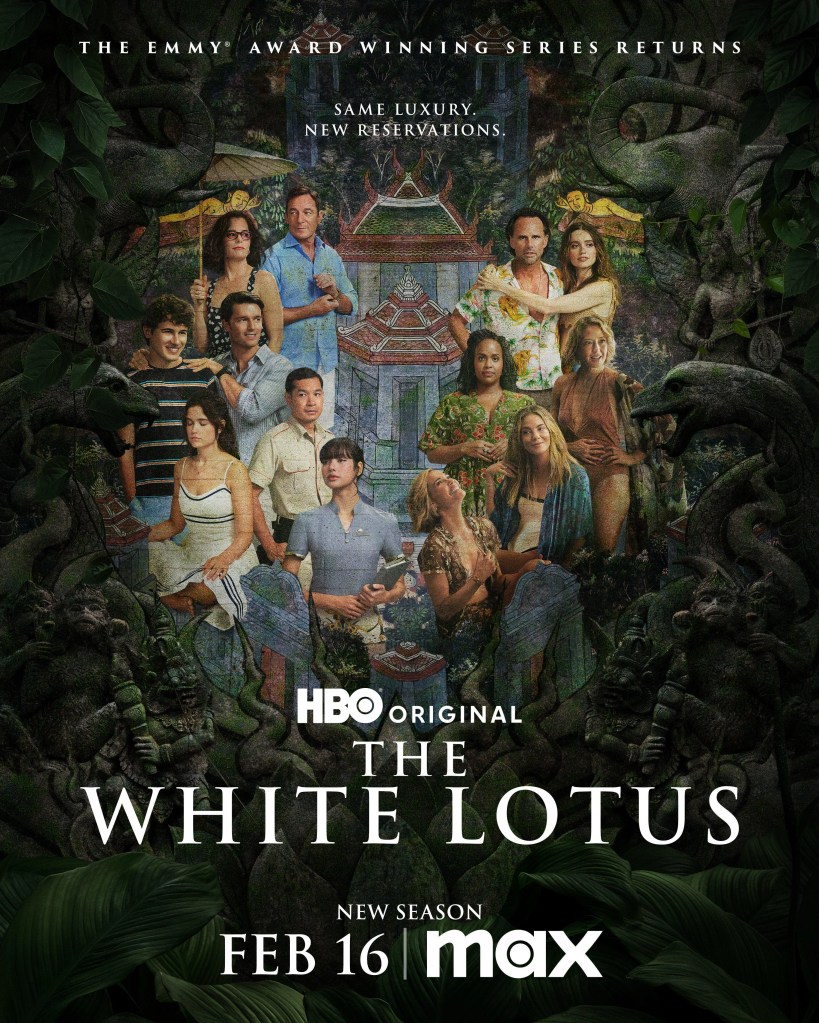
Every season of The White Lotus is built around a theme. Season 1 in Hawaii was about class, with the central struggle existing between the hotel manager and an entitled guest. Season 2 in Italy was about sex and love and power. All of the characters found themselves confusing those three ideas and dealing with the consequences. Season 3 takes place in Thailand with the focus being death and spirituality. The idea for the season came to writer/director Mike White (you guys know that’s Ned Schneebly right? I sometimes can’t believe that’s who we’re talking about in all this) in a drug-induced dream state when he was in the hospital scouting locations in Thailand. Explains a lot of the ideas about death and spirituality. The entire season also has a dream-like feel to it with a lot of actual dream sequences throughout. Shot at the Four Seasons in Koh Samui (which looks stunningly beautiful), it is the biggest season yet, coming in at 8 episodes to its predecessors’ 6 and 7, respectively. But as the show grows, so do its burdens. Season 1 was a biting satire with some good comedic moments, a bit of drama, and the tiniest sprinkle of murder mystery. But really it was all about the characters. Not much happened besides seeing them converse with each other. And yet, somehow, you virtually forget the season began with a dead body. Season 2 (my personal favorite) increases the scope just enough to amp up the drama but not let it overpower the roots of the series. Season 3 continued to turn up that dial. So much so that the drama overtook the comedy and the murder mystery became the core instead of an afterthought. In previous seasons, I don’t remember the fan base theorizing this rabidly after each episode who might have died and who might have committed the murder. The show played into it as well, with foreshadowing, misdirects, and easter eggs. But all of that just moves the show further away from what it was so good at and what people fell in love with in the first place. While season 3 was definitely weaker than past seasons, I was always entertained.
For a show like this, it’s easier to break it down by character groupings. Starting off strong with Rick and Chelsea, or, as Chelsea refers to them, pain and hope. Chelsea is the character who most out of anyone embodies the spirituality this season intended to focus on (yes, I’m looking at you, Piper Ratliff). She believes in horoscopes and fate and omens and soulmates. Not necessarily the particular brand of spirituality most closely associated with Thailand (i.e. Buddhism), but more her own mish mosh of ideas and teachings pulled from all over. We see Chelsea as an optimistic ray of sunshine. But actress Aimee Lou Wood believes her character is hiding behind this persona. “She doesn’t look inside. She pretends to, she says that she reads these books… It’s all the stuff that she uses to deflect: the spirituality, the zodiacs. It’s: don’t look at me, look at this,” Aimee Lou says. And it’s her own hidden pain that draws her to Rick, a walking open wound. Together, they read as stereotypical older man and attractive younger woman. And in some ways they are just that. Chelsea should really listen to “I Can Fix Him (No Really I Can)” by Taylor Swift because the moral of that story is no, sometimes you really can’t. Although what Aimee Lou really pushes back on is the idea that Chelsea is a victim. Just because she is sweet and nice does not mean she has no agency in her decisions. She chooses to be with Rick and to stay with Rick throughout it all. She believes in fate and has told herself that this is her fate. She tells Rick in the final episode, “Amor fati [translation: a love of fate]. It means you have to embrace your fate, good or bad. Whatever will be, will be. And at this point, we’re linked, so if a bad thing happens to you, it happens to me.” If he goes down, they’re going down together. And right she was. I think Aimee Lou speaks so intelligently about this I just want to include her full thoughts on the matter:
“People love Chelsea and now they’re angry that she was put in harm’s way by Rick. But she was not put in harm’s way by Rick, she was put in harm’s way by herself. So, she’s not a victim, she’s like many of the tragic heroines that I adore. I was actually listening to Amy Winehouse the whole time I was there. And so we love these incredible women, and I’m not denying that they were not treated well because they did have grumpy men that were shit to them, right? But they’re also strong, tenacious, determined women. Even if Rick had bundled Chelsea into a car and sent her to the furthest away place that he could find, she would find her way back. She’d run back. And that is a very addict quality, and Chelsea is an addict — she’s a love addict and she didn’t defeat her addiction. It’s like she’s made Rick her higher power, she’s made the relationship her higher power, and she sees God in that moment where he says, “Yes, that’s the plan.” And in that moment, they’ve gone from addictive relationship to connected relationship and that’s what we’ve wanted all along. We’ve wanted it to be not a power dynamic, but a connected horizontal relationship, but of course, in classic Rick and Chelsea fashion, it can only last for one night … Rick has made his pain his higher power, or the revenge his high power. So, they’re both trapped. And Chelsea thinks that fate is external, but it’s internal. It’s her stuff that she hasn’t faced. It’s her unhealed shit. It’s not big forces outside of her pushing her to Rick; it’s big forces inside of her pushing her to Rick. She sees Rick and she runs to him. She literally runs towards her fate. So, that’s what she wants. And actually, it’s patronizing in a way to make it out like she doesn’t have any agency — that Rick is the one who’s caused all the problems. It’s like, they’re both colluding in this thing. It’s like everyone wants to save Chelsea. But she can only save herself… People are so mean about Rick, and as they should be. It’s not nice watching someone be mean to a ray of sunshine, but she is nuts. She’s just as nuts as he is. His God is his own pain, and she’s made her God him. Both of them are crazy. I love them so much, but they are crazy, and they die because they’re crazy. They don’t die because it’s a love story. They die because they’re crazy.”
Yes, that was a very long quote but what can I say? I love Aimee Lou Wood. And as an OG Sex Education fan, I’ve been on the Aimee Lou hype train for a long time now. I feel like a proud mother that other people are finally getting onboard and giving her the recognition she deserves. I think Chelsea really was a fan favorite, a light spot in an often cynical show, and Aimee Lou was fantastic in every way. Walton Goggins as Rick… less so. That’s not to say he wasn’t good in his part but I’m just not sure his part was very good. It didn’t give him much to do other than brood and snap at Chelsea on a revenge journey that was often anticlimactic. Obviously excluding one of the very best scenes of the entire season opposite guest star, Sam Rockwell, where all he did was make reactionary facial expressions and it was immediately iconic. But Sam Rockwell really stole the show in these scenes, coming in hot with one of the most batshit crazy monologues I have ever seen. He continued to be dialed up to 12 in every moment and at the very least has landed himself an Emmy nomination. Rick and Chelsea felt central to the plot throughout the season, both together and separately, and became our eventual victims. Mike White says, “It’s a classic theme of Greek tragedy: someone killing the thing they love while trying to get some revenge.”
Our next group is the Ratliff family. Parents Timothy (Jason Isaacs) and Victoria (Parker Posey) and children Saxon (Patrick Schwarzenegger), Piper (Sarah Catherine Hook), and Lochlan (Sam Nivola) are a wealthy, white family from Durham, North Carolina. Off the bat, the names and the accents were amazing. They seemed every bit the Waspy, white, southern, loud, offensive family we’re all familiar with. But each character ended up on their own journey on this trip. Well, except Victoria, I guess. Parker Posey is the only one-dimensional character from this season I can excuse because it was obvious she was there purely for comedic effect. With some of the best lines and faces from the season as well as her line readings and specific accent becoming a TikTok trend, I have a good feeling she’ll be right there in the Emmy race as well. As the patriarch of the family, Timothy rolls up to the White Lotus with a big ego that is quickly demolished as he finds himself embroiled in some kind of money laundering scheme that is set to take him down. He spends essentially the entire rest of the season in an alcohol-and-lorazepam-induced stupor, lying to his family and daydreaming of ways to kill himself and the rest of them as well. This was one of the weakest storylines of the season to me because not only did it not have any resolution in the end, but it also remained totally stagnant from episode to episode. There were no developments. I didn’t fall for any of the dream-murder sequences for a second. I thought it might finally be getting interesting with the poisoned piña coladas but then that was just another fake out with Chekhov’s blender. Not that I wanted Lochlan to die, but it would have given this story some actual stakes and consequences (also, my thoughts on the blender conversation in response to this episode: yes, it is obviously disgusting that Lochlan did not clean out the blender before using it, but that is so believable teenage boy to me). Jason Isaacs is another incredibly talented actor I felt was mostly wasted playing one note the entire season. (Actually, an interesting fact I read is that Mike White intended Rick and Timothy to be parallel characters this season. This did not read to me at all, but I would have liked to see more of it come through besides them both being total downers the entire time.)
Piper Ratliff’s quick heel turn from wanting to join a Buddhist monastery to deciding she’s better off as a pampered princess was slightly more interesting but felt rushed. We needed to spend more time with Piper inside of her head to really understand her character arc. But maybe the most talked about characters of the seasons are brothers Saxon and Lochlan. We thought we had them read from the start. Saxon was the mini-me of his father, a nepo baby at work and a braggadocious, douchebag, frat boy in life (unfortunately, I know the type). Meanwhile, Lochlan was the timid, awkward highschooler forced to play peacemaker between his older brother and older sister and their wildly different personalities. But by the end of the first episode when the two openly discuss sex and then Lochlan eyes his naked brother, we knew this wasn’t a typical sibling relationship. Would it cross the line into actual incest instead of just strange vibes? To me, that created more dramatic tension than the murder mystery. There are so many interpretations of what this encounter between brothers means and represents. In a season interested in exploring identity, Lochlan is a character who comes in feeling very lost and unsure of himself. Saxon continues to try to form his younger brother in his own mold and Lochlan seems more and more willing to follow his example. But fueled by drugs and alcohol and the feeling of surreality on vacation, the lines between wanting someone and wanting to be someone start to blur. On the show Yellowjackets, this specific internal struggle manifests as cannibalism. On The White Lotus, it manifests as incest. Saxon tells Lochlan after the fact, “It’s okay for you to worship me, but don’t, like, ‘worship me’.” Essentially, figure out the difference and draw the line somewhere. Mike White also adds that their mother, Victoria Ratliff, “has a superiority complex and it has extended to her kids and it’s turned it into a little bit of a cult where they’re all kind of incestuous, that nobody’s good enough and so they’re all kind of looking inward.” This rings very true of historical royal families and another television incest favorite, Game of Thrones (and House of the Dragon). Inbreeding was encouraged to keep bloodlines pure because no one was better than their insular group. So be careful of the messages you impart on your children, I guess. In all of these examples, many claim that it’s just added for shock value. I disagree. It is definitely shocking, and delightfully and intentionally so, but it actually does work to serve the story and make a larger commentary about the characters and society. Patrick Schwarzenegger and Sam Nivola both handled this storyline so deftly. Patrick, especially, received some criticism early on that he was just playing himself, but somehow managed to become a sympathetic character with real emotional depth by the end of the season which is just incredible work. He was one of the only characters to have a transformative arc this season, also helped by time spent with Chelsea. His face-acting when Chelsea reunites with Rick on the beach rivals Meghann Fahy’s version from season 2 (okay, it’s not that good but it’s up there!). Very impressed with his acting chops.
Our trio of female friends has been dubbed “the cougars”, “the blonde blob”, “the fancies”, and probably more. Their real names are Jaclyn Lemon (Michelle Monaghan), Kate Bohr (Leslie Bibb), and Laurie Duffy (Carrie Coon). Jaclyn is a successful TV star and has taken Kate and Laurie, her two childhood best friends, on this trip to reconnect. I had a visceral reaction to this storyline. It just felt so unbelievably true of female friendships. The competitiveness, the talking behind each other’s backs, the growing tension and hatred with every day the girls trip goes on. Their gossiping about each other really reminded me of this SNL sketch, the way they act reluctant to say it before diving right in. Someone said it’s gossip masquerading as concern. Like they’re just saying it because they’re worried about their friend. Not because it makes them feel better about themselves to put her down. I was mostly into this storyline. It was the most low-stakes but felt real to life and gave us some great moments. Laurie’s blowup at the dinner table was building all season, but her finale epiphany didn’t really feel earned to me. It was surprising to see a grouping leave on such a positive note on a show that doesn’t exactly inspire hope. Carrie Coon is obviously fantastic and many have already proclaimed that her monologue has secured her the Emmy. I won’t deny it’s a touching scene that is expertly acted. But it does feel like we’re missing some development between the groups’ fight and their reconciliation. What exactly happened to get them there? Despite that, I enjoyed getting scenes with this crew. You know, except for when it gave me severe PTSD over how truly evil girls (and women!) can be.
Belinda (Natasha Rothwell) was our one rollover character from a previous season… or so we thought. We last saw her being crushed (emotionally and spiritually) by Jennifer Coolidge’s Tanya McQuoid who abandoned Belinda after agreeing to make her dream of opening her own spa come true at the end of season 1. Here, she appears as part of a work exchange program from the White Lotus in Hawaii to check out the spa at the Thailand location. She’s loving being the one who gets pampered for once until she runs into Greg. Or is it “Gary” now? A surprise appearance from the now longest running White Lotus cast member Jon Gries, whose character was last seen orchestrating the murder of his wealthy wife, that’s right, Tanya McQuoid. Tanya was not physically there for this season but her presence was felt as Belinda and Greg/Gary go head-to-head. This seemed like the plotline most likely for murder potential. Greg/Gary has made it happen before. Instead, with the help of her son, Belinda sells her morals for $5 million (if I’m being honest, I can’t say I blame her). She keeps her mouth shut about Greg/Gary and Tanya and she gets to open her own spa. Or not. She can do whatever she wants. Initially, we’re all on her side. It hurt me to my core when she was so callously discarded by Tanya in season 1. I just wanted her to be happy! But no one can ever truly be happy in the world of White Lotus. “Power tends to corrupt, and absolute power corrupts absolutely.” In this case, power is money (although, when is it not?). I didn’t want this evil turn for her. I wanted her and Pornchai to open a spa together and live happily ever after. But now Belinda is the one with the money, becoming the Tanya to Porchai’s her. Before moving on, I did want to make sure to call out Charlotte Le Bon as Greg/Gary’s new girlfriend, Chloe. She has her hands in this storyline as well as Rick and Chelsea and the Ratliffs and I loved seeing her stir the pot in every scene.
The White Lotus managers typically take a main spot in the show to highlight the locals and the working class in comparison with the bougie hotel guests. Season 1 gave us Armond and season 2 gave us Valentina. In season 3, we had Fabian. As mildly entertaining as he was, Fabian was much more of a sideline figure. Our key hotel staff characters this season were Mook and Gaitok, a “health mentor” played by Lalisa Manobal and a security guard played by Tayme Thapthimthong. The duo grew up together and Gaitok has been in love with Mook forever. The central tension in their storyline is that Gaitok wants Mook and Mook wants someone powerful and dangerous. (Spoiler alert: Gaitok is neither of those things.) Isn’t that the struggle all women face at some point in their lives? They ignore the nice guys who put them on a pedestal in favor of the bad boys who don’t care if they live or die. Not only is this somewhat of a tried and true idea, but their relationship didn’t progress much further than just this for the entirety of the season. Only at the end of the finale do we get Gaitok abandoning his core principles and becoming the man Mook wants. Like Sandy at the end of Grease. He gets the girl and the dream job at what cost? His soul. Specifically his spirituality and Buddhist practices. This story definitely got old pretty quickly and became too one-dimensional. But Tayme Thapthimthong as Gaitok was adorably sweet and Lalisa (who, if anyone didn’t know, is a member of the K-pop group, Blackpink, which is probably the biggest girl group in the world right now and Lisa, as she’s known professionally, is apparently like the Beyoncé of Thailand) is one of the most stunning people I’ve ever seen. She’s already a huge star but this is her acting debut and I hope, if she continues to act, she gets to play characters with more emotional range in the future.
One of my biggest issues with the season is that few of the characters seemed to have a satisfying arc. Normally, a good arc is the basis of any decent story. But thinking about it in the context of White Lotus is something different entirely. The central thesis of White Lotus is that vacation is not real life. People go on trips to escape, to transform, to have all of these “life-changing” experiences. But nine times out of ten, you leave your vacation and go right back to living your normal life as the person you were before. People don’t suddenly change in a week. We see these characters getting to live in the false reality of their vacations where they have the freedom to be anyone they want. But they leave back where they began. More than ever, season 3 is fixated on the concept of identity: who we are on vacation, who we are at home, who we are wherever we go. In episode 1, we hear Piper listening to an audiobook by the Buddhist monk she is there to see and he says, “Identity is a prison. No one is spared from this prison. Rich man, poor man, success or failure. We build the prison, lock ourselves inside, then throw away the key.” We might want to change or even pretend to be someone else, but, at the end of the day, we’re stuck with our true nature. There’s no escaping ourselves. So on a show like White Lotus, do we need our characters to have arcs? Or is it the cynical point of view of the show that they don’t? It’s a complicated corner the show seems to have written itself into and one that they have dealt with in more rewarding ways in past seasons. While it might be proving a point, it’s not always fun to watch.
The most common complaint I’ve heard about this season is that it was boring. I disagree. I was never bored. People seem to forget that there were many complaints that the first season was boring. Nothing crazy or dramatic happened in that one at all. Maybe because that season was funnier, people were more forgiving of the stagnant plot. I wasn’t so much bored as I was longing for more. Reaching for meaning I wasn’t finding. I felt like I wasn’t sure what the show was going for much of the time. What was the message it was trying to communicate? It felt less clear than past seasons. Reading a bunch of articles and interviews with the cast and creators really helped to illuminate a lot of things for me and provided interesting insights and explanations, which I appreciated, but I also think the show needs to be able to stand on its own with having to do outside research to get the full picture. The White Lotus does continue to be an amazing actor showcase for its cast. There are always famous actors you’ve never seen in a role like this as well as young talent you haven’t heard of. Between the two, there are plenty of star-making performances (Aimee Lou Wood and Patrick Schwarzenegger, I’m looking at you). I always have a great time at The White Lotus (put that on a T-shirt), even with a more flawed season like this one, but I hope next season can course correct back to its original North Star. Mike White, through the voice of the monk again, tries to tell us that not everything needs to be resolved. We hear in the finale, “It is easier to be patient once we finally accept there is no resolution.” And I agree. Not every story needs resolution. Some are better without it. But in this story, I needed more. More than everyone waving goodbye as if a mass murder didn’t occur at the hotel only hours before. I don’t think that’s asking for too much.
2025 Count: 25 movies, 17 seasons of television, 3 specials
 I Think I've Seen This Film Before