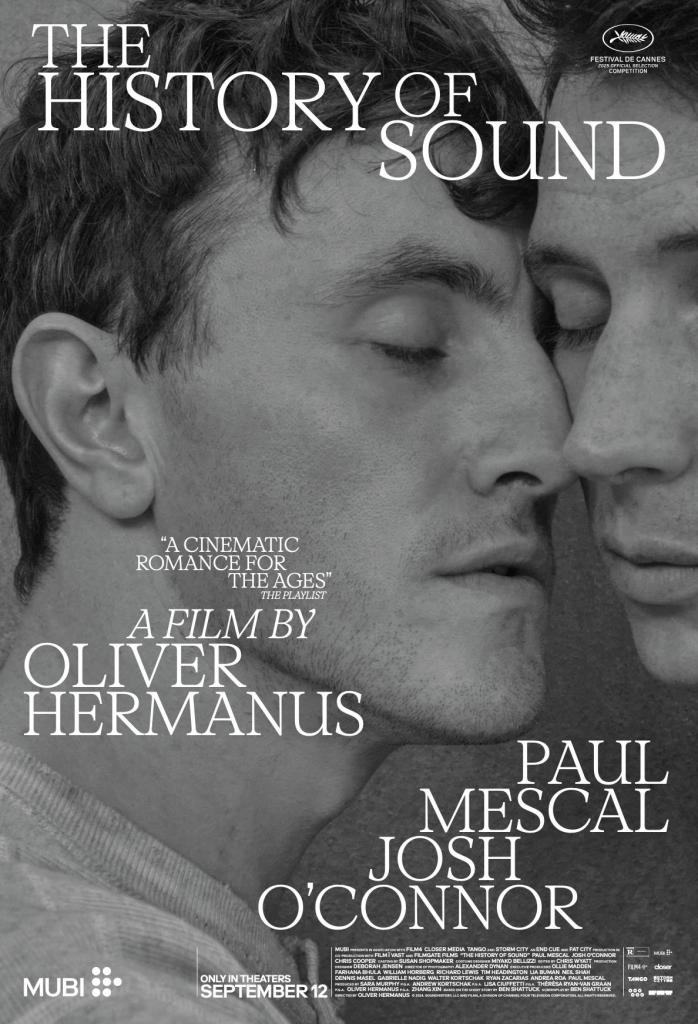
I knew almost nothing about The History of Sound when I got the chance to go to an early screening of the film. But I’m finding more and more these days that I prefer it that way. No expectations. I was excited, though. This was my first time back at the movies in over a month. What I did know was that the film starred two of the internet’s boyfriends, Paul Mescal and Josh O’Connor, and I was pretty sure it was a romance between them. So I imagined a beautiful story that would break my heart. I was partially right. I really wanted to like this movie but, honestly, I got bored. I don’t mind slow and I don’t mind artsy… as long as it moves me emotionally. This movie never got there for me.
The film by Oliver Hermanus is adapted from a short story by Ben Shattuck (who also wrote the screenplay for the movie). Set in 1917, The History of Sound follows David (O’Connor) and Lionel (Mescal) who first meet and fall in love over a shared passion for folk songs when they’re both students at the New England Conservatory of Music in Boston. Forced by World War I to go their separate ways, the pair reunites a few years later to travel the backwoods of Maine. Their journey is for the purpose of “song collecting”, collecting and preserving traditional folk tunes and ballads from rural people. The trip is bliss for the young couple, spending time far away from society, just the two of them, experiencing brand new music and sounds. But all good things must come to an end, and when the journey concludes, David goes back to teaching at a university in Maine and Lionel goes to Europe to study and sing in professional choirs. Spoiler alert: the two never see each other again.
Very early on in the film, David tells Lionel, “Everyone you know is going to die someday.” And at that moment I knew David was doomed. It’s a crushing reveal, but one that was predictable. Especially with all the ways the film mirrors the classic gay romance Brokeback Mountain (the better version of this story, in my opinion… it’s not even close). The endings are eerily similar. One half of the couple finds out the other is dead from his widow in a conversation that subtly reveals she knew the truth about the relationship between the two men. The major difference is that while Lionel and David do hide their relationship, the movie doesn’t harp on the covert nature of it. There is no undercurrent of shame, no rage in their repression, no fear of being found out. Lionel and David are allowed to love freely in their own world. That’s the most differentiating element of the film, especially one set in this time period.
Paul and Josh are both expectedly great. They’re both such internal actors, it makes them perfect for these parts that are light on dialogue, heavy on body language. So much of the passion and yearning and hurt is revealed just through their eyes. Josh O’Connor is kind of always playing a depressed charmer role. He truly does a sad smile like no other. Paul Mescal wears glasses in the movie that make him look exactly like older Harry Potter from the epilogue of the last film. All of the scenes camping in the words conjured images of Harry Potter and the Deathly Hallows: Part 1, as well (my favorite of the Harry Potter movies). Josh and Paul are also two Brits playing American. Pointless comparisons aside, the two leads are both incredibly talented actors who clearly gave their all to these roles. It’s not their fault the film doesn’t allow them to reach one tier higher of emotional connection to the audience.
I think maybe the most stirring thing about the movie to me was the aesthetic. It looked beautiful. Shots of landscapes across parts of New England, Kentucky, even Europe. It somehow had amazing fall/winter vibes even though it covered all seasons. The entire film manages to evoke this cold but cozy feeling. Like waking up on a grey winter morning and it’s cold so you just stay snuggled in your warm bed. I think the sounds of creaking floorboards and pale lighting give that imagery. And for a movie about sound, it’s extremely quiet. Enough to hear those floorboards creak. And singing. Lots of singing. Like I said, the dialogue is sparse. It’s the visual language of the movie that takes center stage next to the acting performances.
The History of Sound really is beautiful. A melancholic beauty. It looks picturesque, the performances are intimate and tender, and the story is full of romance and heartache. But sometimes that’s just not enough to speak to you on an emotional level. A movie like All of Us Strangers, another gay romance starring Paul Mescal, completely rocked me to my core. The weight of that movie stayed with me for days. The History of Sound is all surface-level beauty. It doesn’t dig deep. The ending provides a really lovely bookend that almost brought me back in, but it was too little too late at that point (the movie also almost ended like four different times which didn’t help). Variety called the film, “Brokeback Mountain on sedatives”. I think that’s a little unfair. The History of Sound has its own merits separate from Brokeback. But it’s definitely not the all-encompassing, lingering love affair I wanted it to be. If it wasn’t already on your radar, I don’t think you’d be missing much to let this one pass you by.
2025 Count: 58 movies, 39 seasons of television, 4 specials
 I Think I've Seen This Film Before