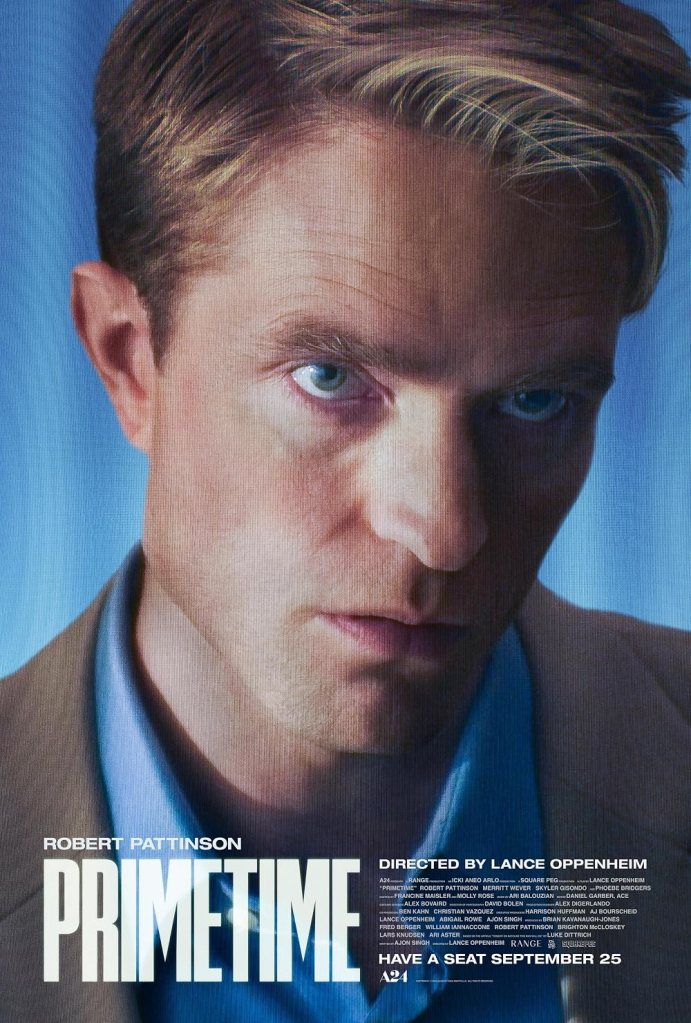
Primetime may not end up being one of the best movies I’ve seen this year, but it’s probably one of the best trailers. I was interested in the movie since I first heard about it because any Robert Pattinson performance has become must-see TV for me, but seeing the trailer for the first time skyrocketed the movie to the top of my anticipation list. Primetime is “inspired by the true events” of the show To Catch a Predator on Dateline NBC which I have never seen or really thought too much about. It comes from director Lance Oppenheim, best known for his documentary work, making his narrative feature debut. Lance, who is my age, grew up in the same time as me but happened to be fascinated by To Catch a Predator and particularly its host, Chris Hansen. The show saw the host and the Dateline team trapping potential pedophiles with actors posing as teens in chatrooms and in person and using hidden camera set-ups to catch them in cooperation with local law enforcement. It ended after facing some backlash over its methods of confronting suspects. I believe Lance and I were both too young to really understand or process the show when it first ran from 2004 to 2007, but the movie takes place during that time while looking at the show through our modern day lens, attempting to question the morals and ethics in a way that maybe wasn’t as front of mind back then. It’s a very strange, very stylized film that I found was more successful in telling us something was off than it was in arguing why it was wrong.
Primetime is loosely adapted from Luke Dittrich’s 2007 Esquire article “Tonight on Dateline This Man Will Die” by first-time screenwriter Ajon Singh. While the film is more a character study, a showcase of one man’s descent into madness, than a real narrative story, the central plot essentially starts in 2006 when then-NBC head Jeff Zucker (played by Jeff Zucker himself) tells Chris Hansen (Robert Pattinson) and his producer Andie (Merritt Wever) that their show is being moved to a primetime network slot, going up against Lost on ABC (“beating” Lost comes up multiple times in a way I personally found very funny because of how much I love that show). To compete, Chris becomes increasingly obsessed with upping the stakes of the show to bump ratings and takes his role in it all more seriously than ever. Meanwhile, the show’s success has Andie being pursued for jobs by rival networks and newly recruited “decoy” Dan (Skyler Gisondo) struggles to make sense of his purpose in the scheme and how his work squares with his own morality and career goals. Both screenwriter Singh and director Oppenheim have been clear about the fact that this film is not a biopic. “I was not really interested in a biopic,” Singh told The Hollywood Reporter. “I wanted to create something heightened, stylized and subjective, dancing on the line between reality and spectacle, which To Catch a Predator did so well.” Oppenheim echoed this, calling the film a “docufantasia” and saying, “I always loved the way To Catch a Predator mixed truth and fiction — creating this apparatus, blending artifice actors with fake decoy houses and props like the sweet tea and the pepperoni pizza, that would then collide with very, very real stakes. How do you create something that captures the darkest feelings of humanity mixed with the feeling you would get when you’d hear Chris Hansen say one of his all-time great one-liners?” (The Hollywood Reporter). “The line between reality and spectacle”, “mixed truth and fiction”, that’s the grey area the movie tries to operate in over the narrative details of creating a popular TV show.
The Hollywood Reporter called To Catch a Predator “a sordid spectacle, trash TV dressed up as an Important Public Service.” It’s an entity that makes finding “the line” impossible. What’s real and what’s television when you’re dealing with people’s lives and serious crimes? That’s something the Primetime team asked themselves. “This film is an exploration of what this kind of work does to the people who make it. It’s based on and inspired by the experiences of working inside an extremely dark world 24/7, attempting to do extremely serious journalism, and how that becomes also extremely confusing when you’re tasked with turning it into an entertaining television show,” Oppenheim told The Hollywood Reporter. Pattinson said, “We became increasingly interested in the dichotomies in the show. The sharp splits between reality and artifice, between the shockingly serious and the absurd,” (The Hollywood Reporter). Inside of the film, Chris Hansen has lost sight of any line. He sees himself as a savior, a superhero, there is no artifice to anything he’s doing, it’s all real. The more he unravels, the further he falls into his own self-grandeur, talking about “cleansing” the world of pedophiles in language that feels very manifesto-like. He succumbs to the righteous glee of being a vigilante, inflating his own self-importance. Chris asks a predator during a taping at the beginning of the film, “What would have happened if I wasn’t here?” He’s implying that his presence prevented a horrific crime. But at the end of the film, after a targeted pedophile kills himself rather than be taken in by authorities, Chris repeats: “What would have happened if I wasn’t here?” This time, instead of him preventing a mess, he’s causing it. He becomes the bad thing that happens.
Is there any real justice when something is done for the public eye or does it always become performative? Primetime argues performative justice and public shaming have always been a part of history that’s just evolved over time. “There used to be a pillory in every civilized town but now there’s a TV in every home,” Hansen tells Decoy Dan. Oppenheim expanded on this to The Hollywood Reporter saying, “It’s ingrained in our DNA to want this spectacle of justice.” The film speaks to this specific moment in time in the mid-2000s where these hidden camera shows exploring human behavior were all the rage. What does it say about America and Americans that these shows were so popular? Not so unlike reality TV these days, audiences get a sense of moral superiority when comparing themselves to the people portrayed on these shows. And particularly in the case of To Catch a Predator, there’s a pretty clear distinction of good vs. evil that almost every single viewer can get behind. Primetime attempts to pick apart those morals. Going in, I thought the movie was going to get more into the legal grey areas of entrapment and who are these people to be doing this because they’re not law enforcement or experts or anything and what actually happened to these predators afterwards and so on. But mostly it focused on the emotional moral toll it took on the people involved in creating the show. I would’ve liked to see more of both sides. I think because the movie is more interior and less narrative than you would expect, many had similar criticisms. Instead of seeing the creation of the show from its inception, we’re thrown into the middle of it. How did the idea even come about? How did Chris Hansen get involved? The movie doesn’t care to answer any of that. Although I am personally interested in that information, I kind of hate criticisms like “why did the filmmaker tell this story and not this other story?” That’s a moot point. This is the story they choose to tell for a reason. Letterboxd user @WoopyBoi summed it up perfectly: “Many of the negative reactions of this feel like people wanted a completely different movie and that movie is David Osit’s documentary Predators. That piece dissects the ethics of the show and the horrors of child abuse. PRIMETIME isn’t about the predators rather it’s about America’s relationship to the predators through Hansen.” The creators said it themselves: this isn’t a biopic and it’s not a documentary. If you’re looking for truth and fact, you should probably go elsewhere. (And, yes, of course I did go and watch the Predators documentary after this to learn more. A frightening and fascinating text.)
So what moral and ethical takeaways does Primetime want to leave us with? A movie obsessed with the grey areas gives us no clear answers. Weirdly and uncomfortably and confusingly, the film does kind of make you feel some empathy for the predators. Maybe because it shows them as human beings, not just cartoonishly evil villains, or maybe because it questions the motives and practices of the people responsible for putting them in front of cameras. But is that the point of the movie or an unintended consequence of the framing of this story? Obviously these are bad people who should face punishment for their actions, but do they still deserve justice? What are the limits of vigilante justice? Is there any kind of justice at all? At the very least, Primetime doesn’t think that To Catch a Predator qualifies. I think in focusing so deeply on telling the story of Chris Hansen and the team behind the show, the movie loses sight of what message, if anything, it wants to communicate about the subjects at the center of these sting operations and the alleged crimes they’re committing. But, then again, the movie’s message about Hansen himself isn’t that much clearer. Maybe I just wanted to see a little more blowback in the end. On anybody. But no, we just have to sit with it instead of seeing anyone face any consequences outside of their own psychological breakdowns. The ambiguous ending leaves you walking out of the theater feeling uneasy. Is that what the filmmakers want us to feel? “Now, go stand in the corner and think about what you did”, as Taylor Swift once said. We, as a people, as a country, as a viewing audience, made this show popular. We tuned in to demand our pound of flesh and convinced ourselves it was justice. Maybe Primetime isn’t particularly interested in telling us who the good guys and bad guys are because, in the end, it’s never really that black and white.
The film may exist in a moral grey area but, visually, the aesthetic is loud and colorful. The daytime footage is super saturated, dominated by a burnt orange color and a gritty texture. The darker scenes utilize blue lighting, often featuring people lit by screens. It’s a visual that feels almost more relevant or recognizable in today’s day and age with smartphones and other technology that constantly surrounds us. Screens are everywhere in this story too. We see camera footage, grainy TV monitors, home video, inserted clips from real shows, news broadcasts, and more, reminding us of the constant surveillance in the age of technology but particularly on reality TV. As the film goes on, it shifts to almost a horror movie of sorts. There are extreme close up shots which Variety called “nightmarishly claustrophobic” and the actors are suddenly lit from underneath, like when someone tells a ghost story and puts the flashlight under their chin. For Robert Pattinson, especially, it has the effect of making his eyes look completely black and haunted. The film both in story and aesthetic captures the mid-aughts really well. We see people using AIM, worried about National Inquirer exposés, primetime TV being a big deal, and “London Bridge” by Fergie and “Seasons of Love” from Rent needle drops both used to extremely funny effect. A scene where Chris Hansen searches for himself on the internet shows us not just how websites used to look, but also a glance at the other top news stories of the time, reminding us of the sleaziness of celebrity culture back then. Through this very stylized filmmaking, the over-saturation, and visceral feel, DP David Bolen shows us how that sleaziness bled through into popular entertainment as well.
It’s been a year at the movies where a handful of actors have dominated the screen, appearing in multiple major projects. Zendaya, Anne Hathaway, and Robert Pattinson have been everywhere (and if I do my job right I’ll see every one of their film appearances!). So far this year Pattinson has starred in The Drama, The Odyssey, Primetime, and has Dune: Part III coming soon. Both his on and off screen personas have made him a box office draw. Variety cited exit polls that showed that more than 75% of audiences cited Pattinson as their number one reason for buying a ticket to Primetime. I would consider myself part of that majority. Robert Pattinson has become my favorite little freak (- Harry Styles). And I now feel legally obligated to mention that in every review of a movie he’s in (“Robert Pattinson loves to play a little freak and this performance is no exception.” – The Drama. “I always say Robert Pattinson loves playing a little freak and I love to watch him do it.” – The Odyssey. Stay tuned for the freak mention in Dune: Part III!) He plays Chris Hansen like an alien. No normal human being has ever spoken like that, moved like that, or interacted with other people like that. And while in some ways the performance is unhinged and over-the-top, it’s not totally unlike the real Hansen. As Chris unravels and becomes more and more detached from reality, the twitchier and more outsized he becomes. Some of his more brooding, haunted moments had shades of Edward from Twilight, a fun reminder of the wild ride of Pattinson’s career. Merritt Wever has never been bad in anything in her life and I think we need to give her the Oscar for Best Gum Chewing for her performance here. Andie might be the most heartless character out of all of them and Merritt plays her with a calm ferocity. Skyler Gisondo as Decoy Dan is arguably the co-lead of the film. I thought he was fantastic, communicating so much through his face and eyes without saying a word. Phoebe Bridgers also plays a decoy in her acting debut and was actually great as well. The most shocking appearance in the film is Jonathan Lipnicki (yes, Ray from Jerry Maguire who might be the cutest kid of all time) playing one of the predators and doing full-frontal nudity. I can’t even get into this too much because I don’t want to think about those two performances being the same person. But Lance Oppenheim told press that “it was an intentional choice to cast actors like Lipnicki and Gisondo because of their history as child stars as a way ‘to take the baggage that they brought to movies before and figure out new ways for them to shed the skin of who they were in different films,’” (The Hollywood Reporter). I also think it adds an interesting wrinkle of audiences bringing their own association of these actors as children into a story about the exploitation of children and those who seek to prey on them.
It should come as no surprise that the real Chris Hansen has been extremely outspoken about his opposition to this movie. He was not involved in the making of the movie and then bought ad space for his true-crime streaming network, TruBlu, to run before every screening of Primetime for at least the first four weeks of its release. Here are some things he has said about the movie: suggested Denis Leary would’ve been a better casting choice than Robert Pattinson, called the film an “insult” and compared Hollywood to the predatory behavior in the move citing Harvey Weinstein in the process, called the film “so bizarre” and “detached from reality”, and refused to sign an NDA to see an advance screening of the film. But, having said and done all that, his vocal protestations only made more headlines about the film.
Primetime performed surprisingly well at the box office for a movie with such a complicated subject matter. Interestingly enough, opening weekend crowds skewed heavily Gen Z, with 69% of audiences under the age of 30. That’s especially significant because most of this age group were way too young to watch To Catch a Predator when the show aired from 2004-2007 (Variety). Chalk it up to the true-crime boom, Gen Z’s obsession with early 2000s nostalgia, or Robert Pattinson’s popularity (especially with the generation he wrongly insists he’s a part of), but whatever the explanation, Primetime managed to find an audience among a generation that largely missed the phenomenon it’s depicting. Maybe the film functions better that way, as a kind of voyeurism for people to look at and say, “How did anyone let that happen?” instead of audiences who did watch the show way back when to have to reconcile with their own morals. I liked the movie. I thought it was extremely visually interesting while being funny at times and horrifying at others. The performances are enthralling. But it still felt like it was missing something. One final gut punch to bring it all home. Primetime poses a lot of fascinating questions while putting this era of exploitative, sensationalized TV under a microscope. But it gets a little too caught up in the mind of its egomaniacal main character to follow those inquiries in a meaningful way.
2026 Count: 75 movies, 46 seasons of television, 1 special

